

Surface Defects &
Quality Inspection
Sub-millimeter surface defects. Gap accuracy on body panels. Numerous part variants on the same line. Manual inspection can't scale — and most vision cameras miss the geometry needed to catch it reliably.
Bin Picking of Challenging Parts
Parts with random orientation in mixed-depth totes. Getting a clean pick pose on small, awkward automotive components — without a miss — is what most systems struggle to deliver.
Reflective & Shiny Metal Parts
Most 3D vision cameras saturate on specular surfaces, producing noisy or incomplete point clouds — and miss-picks follow. This is one of the most common reasons automotive teams switch 3D camera systems.
Assembly Errors from
Part Variation
Even small variations in part position or material deviation can cause assembly errors — missed screw inserts, misaligned glass or tires, or radar modules placed outside tolerance on EV lines. Without real-time 3D position feedback, these errors repeat until a human intervenes.
Cycle Time vs. Accuracy
Trade-off
High-throughput automotive cells operate with demanding cycle time budgets — a 3D scan that takes too long, or trades speed for data quality, directly reduces line efficiency.
Poor Camera Reliability
in Production
Overheating under continuous operation. Accuracy drift between shifts. These are the failure modes automotive teams report when replacing an existing 3D camera — and why industrial-grade design and thermal stability matter from day one.
See what your robot sees
Rotate, zoom, and explore real point clouds of automotive parts, captured with a Zivid 3D camera.
What engineers build with Zivid 3D cameras
Surface Inspection and Sub-Millimeter Defect Detection
Zivid cameras capture high-resolution point clouds and color images simultaneously — giving inspection systems both the 3D point clouds and the 2D data needed to detect and classify defects in a single acquisition, without a separate 2D camera.
Automotive teams use this for gap and offset measurement on body panels, painted surface defect detection, and quality checks across high-variant production lines where manual inspection is a throughput bottleneck.
Accurate point clouds on reflective and shiny automotive parts
Zivid cameras use its proprietary HDR and reflection filtering to capture accurate, complete point clouds on highly reflective surfaces: polished sheet metal, chrome components, and painted surfaces.
In automotive production, this covers bin picking of small shiny fasteners, picking stamped sheet metal from metal bins, and handling shiny components in mixed totes — all within tight cycle time budgets that leave no room for re-scans.
Stable calibration in demanding automotive environments
The failure modes automotive teams report most when replacing an existing 3D camera system: overheating under continuous production loads, poor resolution on small parts, and accuracy drift between shifts. These aren't edge cases — they're what happens when a camera isn't built for 24/7 industrial operation.
Zivid cameras are IP65 rated, with calibrated accuracy maintained across temperature variation and shift changes — no manual recalibration required.
If your current 3D camera is failing in production, you're not alone
Many automotive teams come to Zivid after their deployed vision systems hit consistent failure modes under real production conditions.
Customer Stories
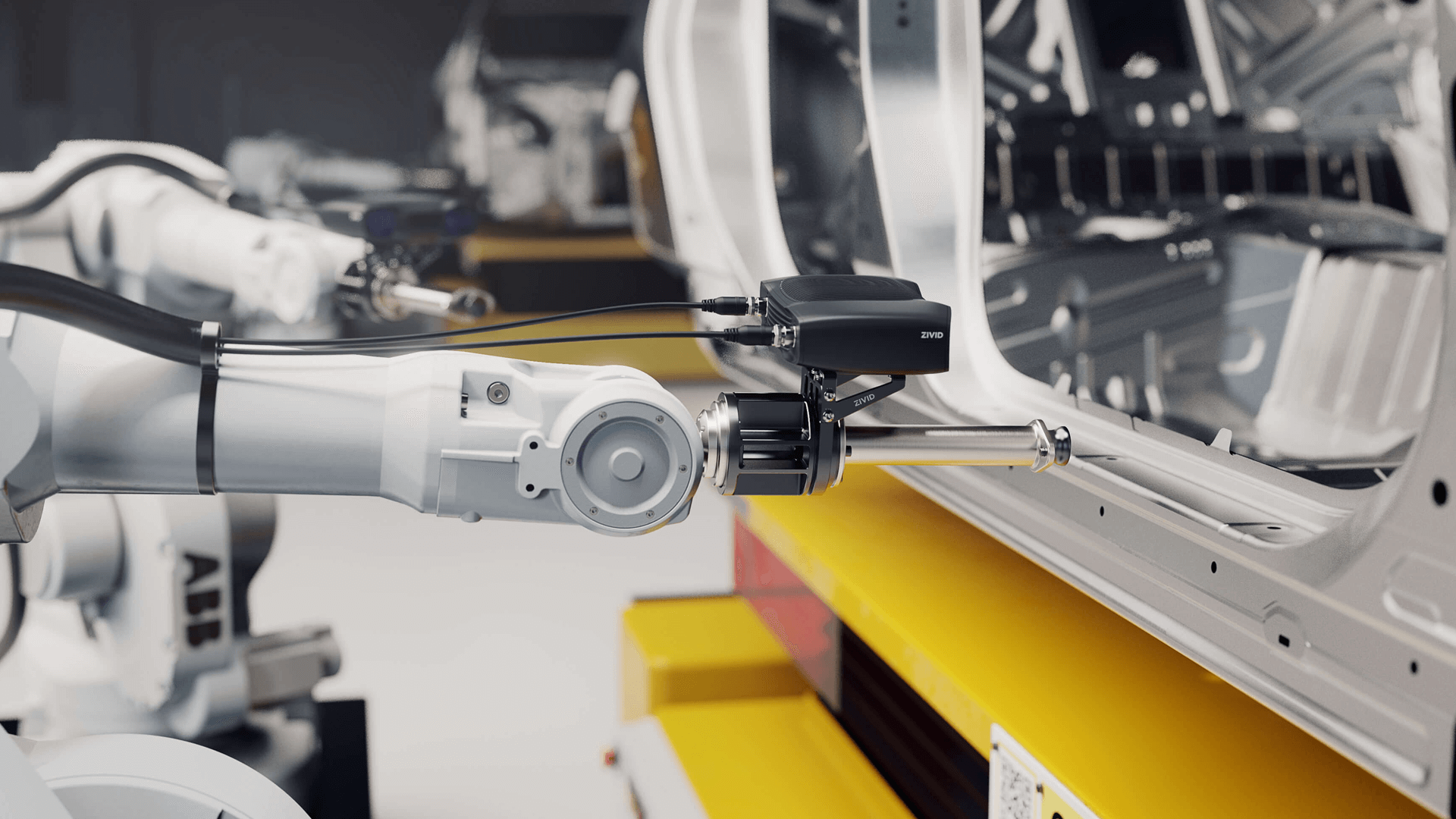
Pickit | Automotive surface finishing application
Pickit Korea remove troublesome dust spots in automotive surface finishing using a robot-mounted 3D camera.
CMES | Automotive Assembly
CMES fuse deep learning with 3D machine vision to change the face of automotive assembly.
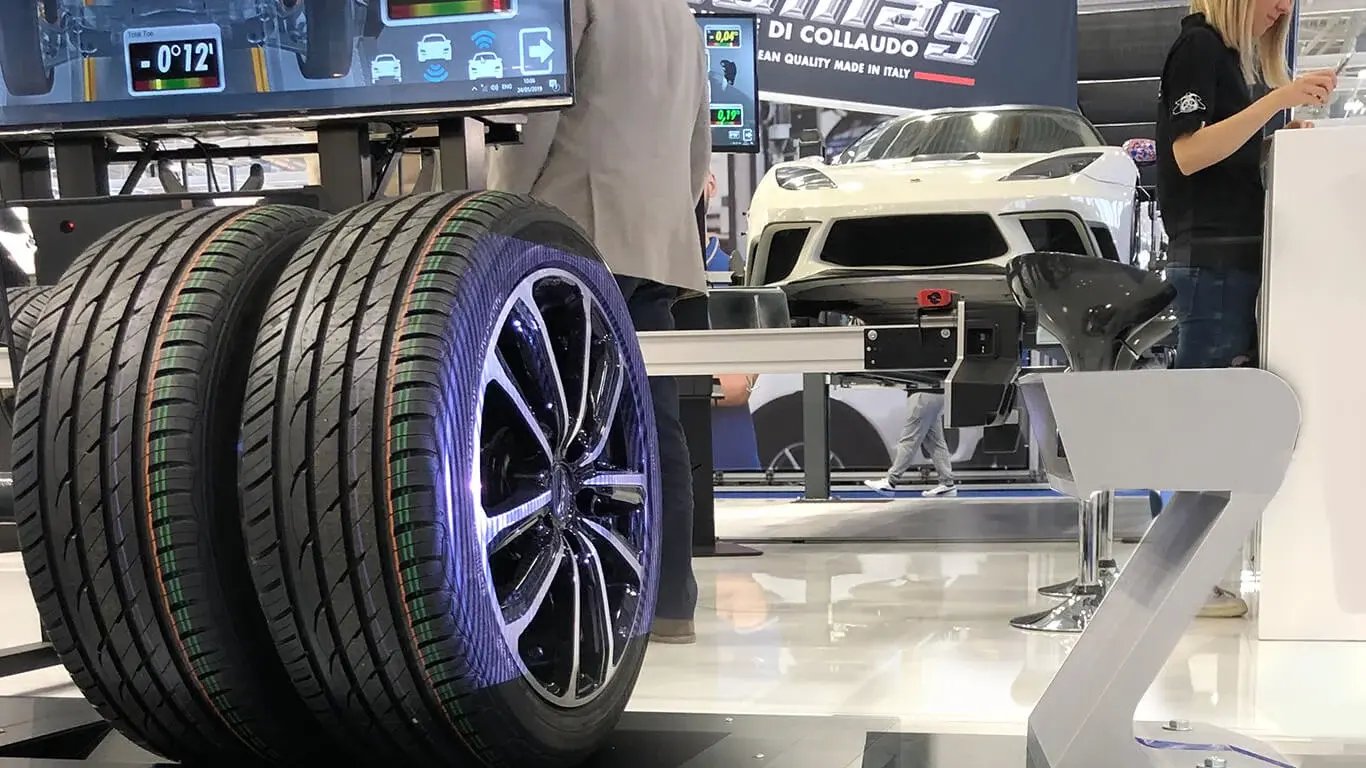
Vamag | Contactless vehicle inspection with 3D vision
Enabling the most accurate contactless vehicle inspection system.
Frequently Asked Questions
Zivid 3D cameras use multi-acquisition HDR and Vision Engine reflection filtering to capture accurate point clouds from reflective surfaces, including polished sheet metal, chrome fittings, and coated body panels. This capability is validated in automotive production environments, covering small shiny fasteners, stamped sheet metal in metal bins, and semi-shiny tote components with varying orientation.
The most common failure modes reported by automotive teams replacing existing 3D camera systems are: overheating under 24/7 production loads, poor resolution on small or complex parts, and calibration drift between shifts due to temperature variation. Zivid cameras address all three — with IP65 ingress protection, active thermal management, and calibration stability tested across continuous industrial operation.
Yes. Zivid cameras output a full-resolution 2D color image and a complete 3D point cloud in a single acquisition. AI segmentation runs on the 2D image; pick-pose estimation uses the 3D data — no separate 2D camera, no 2D-to-3D calibration, no synchronisation delays.
Automotive integration teams consistently cite 2D-to-3D calibration as a source of project delays, eliminating it is a meaningful reduction in integration complexity.
Zivid cameras are used for gap and offset measurement on car body panels to sub-millimeter accuracy, painted surface defect detection at fine resolution, in-line inspection of die-cast parts, quality checks across numerous part variants on a shared production line, battery pack inspection, and connector quality inspection at automotive suppliers.