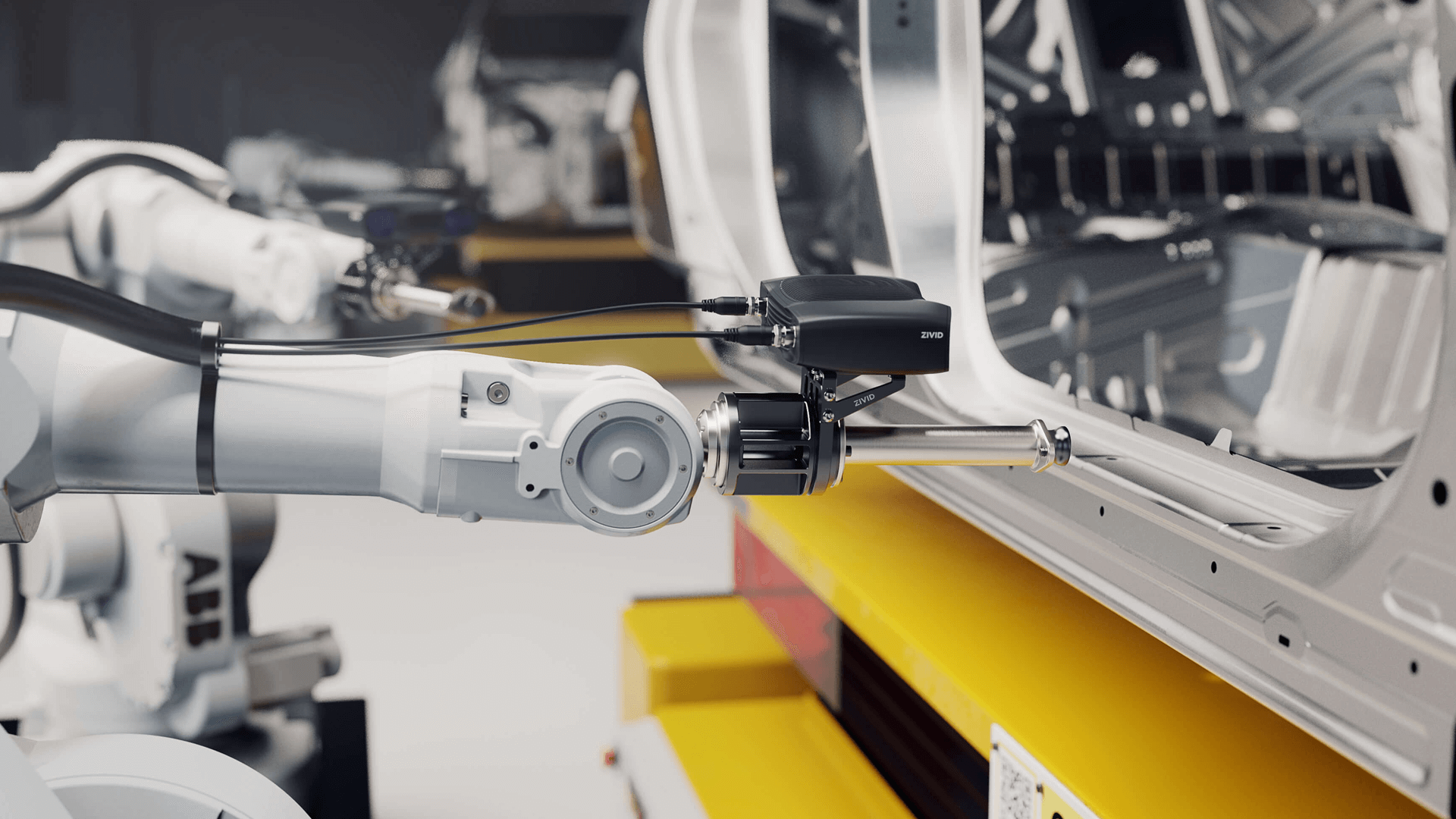

What stops most 3D cameras from
working in manufacturing
Whether you're evaluating cameras for a new cell or replacing a system that couldn't handle your parts, these are the problems Zivid is designed around.
Incomplete point clouds
Small, densely stacked, or complex parts demand a complete point cloud — so the robot can accurately determine each part's location, shape, and orientation.
Reflective metal surfaces
Shiny CNC blanks, anodized parts, and machined steel confuse structured-light cameras. Zivid's reflection filters capture them cleanly.
Harsh industrial environments
Extreme heat, dust, and vibration push most 3D cameras out of calibration — resulting in failed picks and unplanned downtime.
See the data quality for yourself
Rotate, zoom, and explore real point clouds of manufacturing parts — shiny metals, CNC blanks, weld joints — captured with a Zivid 3D camera.
What engineers build with Zivid 3D cameras
Zivid cameras capture the data — your team builds the solution. Here's what's been built across manufacturing floors worldwide.
Reliable picking from disordered bins
Zivid cameras generate the dense point clouds that bin-picking algorithms depend on — handling overlapping, touching, and partially occluded parts in a single scan.
•
Detect tiny and densely stacked parts:
high-resolution point clouds more than 99% true-to-reality in position, dimension, and orientation
•
Handles shiny, reflective, and polished parts:
Zivid's HDR and vision engines overcome reflection artifacts on the most challenging metallic objects
•
Robot-mounted ready:
short baseline minimises occlusion, so the robot can capture from the optimal position and viewpoint
Precision 3D vision for complex assembly tasks
Robotic assembly demands precise alignment and complete point cloud data. Zivid 3D cameras are purpose-built to handle the most challenging assembly parts and industrial conditions.
•
Accurate 3D data on small and complex parts:
over 99% accuracy in position, size, and orientation — complete point clouds with no holes or missing data
•
Handles shiny metals and deep black parts:
Zivid's HDR and reflection filters overcome imaging artifacts on the most challenging assembly components
•
Built for industrial environments:
rigorously tested against vibrations, temperature changes, dust, and varying ambient light (0–2000 lux)
High-fidelity 3D data for consistent surface quality
When the scan is off, the toolpath is off. Zivid 3D cameras give robots the millimeter-level accuracy they need for reliable sanding, grinding, deburring, and polishing — part after part.
•
Handles complex part geometries:
complete point clouds across flat, curved, corrugated, and irregular surfaces without noise
•
Accurate scans on shiny and dark surfaces:
Zivid's HDR and reflection filters deliver reliable data on steel, aluminium, and nickel
•
Built for the factory floor:
IP65-rated, with in-field correction to maintain calibration under vibration, dust, and changing light
Millimeter accuracy for reliable machine loading
Minor deviations cause misloads, collisions, and unplanned downtime. Zivid 3D cameras deliver accurate, low-noise, repeatable 3D data across varying materials and lighting conditions.
•
Reliable pick and place on ordered and unordered parts:
clearly separates parts and captures fine orientation details — no pre-sorting required
•
Complete point clouds on reflective and dark materials:
Zivid's HDR and wide dynamic range handle extreme contrast scenes in a single capture
•
Reduces setup time and manual adjustments:
infield correction tools and presets minimise tuning; accurate grasping in a single shot eliminates realignment jigs
Stop reprogramming weld paths. Start welding accurately.
Small variations in part geometry shift weld seams and cause costly rework. Zivid 3D cameras enable robots to detect, adapt, and weld accurately — even when parts aren't perfectly positioned.
•
Flawless weld seam detection:
millimeter-level trueness and resolution for accurate weld paths on any part geometry
•
Weld confidently on reflective metals:
Zivid's HDR captures weld seams on shiny metals and newly deposited welds without data loss
•
Reliable in harsh welding environments:
performs under extreme heat, vibration, and spatter without frequent recalibration
Why Zivid point clouds work out of the box
Vision engineers need a camera that produces clean, dense, accurate data — not a point cloud that requires aggressive filtering before it's usable. Here's what Zivid delivers at the sensor level.
| Characteristic | What it means for your pipeline |
|
Unified 2D and 3D vision |
2D images, point clouds, normals, depth maps, and barcodes — multiple vision modalities from a single sensor with integrated flash, native pixel-to-point mapping, and adjustable resolution from 0.5 to 8 MP. Learn more → |
|
>99.8% dimensional trueness |
Zivid 3D cameras have a dimensional trueness error of <0.2% — meaning all objects are represented true to reality in position, dimension, and orientation, even in harsh conditions. Learn more → |
|
Factory-calibrated point clouds |
Zivid 3D cameras maintain calibration even in rapidly changing thermal environments. Keep your camera at peak performance with Zivid hand-eye calibration and in-field correction tools. Learn more → |
|
Zivid SDK |
Supports C++, .NET, Python, ROS, and GenICam/HALCON — use the API to manage cameras, control acquisitions, and access point cloud data in your language of choice. Learn more → |
|
3D presets |
Simplify camera parameter tuning and eliminate the need for manual adjustments in most cases. Preset categories cover consumer goods, parcels, manufacturing, and inspection. Learn more → |
Customer Stories
Graymatter Robotics | AI-powered robotic surface finishing
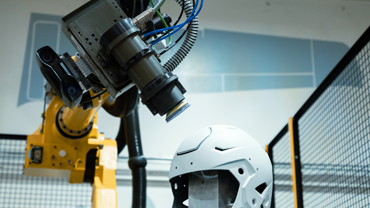
GrayMatter integrated the Zivid camera into their AI-powered robotic cells, enabling precise, color-accurate 3D scanning for surface finishing applications.
ING Robotics | 3D vision solution for manufacturing
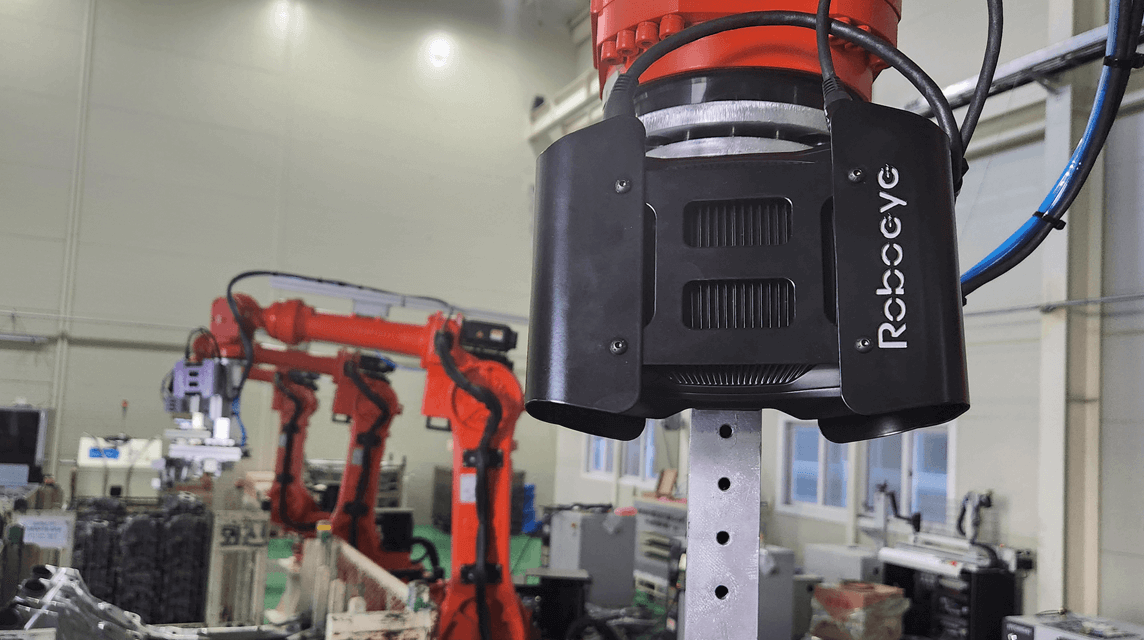
ING Robotics introduced ROBOEYE, a 3D vision solution combining the Zivid 2+ L110 3D for precision assembly automation.